Altro Health Raised $7M to Build the Clinical Infrastructure Wellness Businesses Need
With $7 million in funding, Altro Health is building infrastructure for wellness businesses ready to offer more under their own brands.
Topical GHK-Cu skincare is more than a passing trend. It’s a copper peptide backed by 50 years of research. Here’s what the clinical data shows.
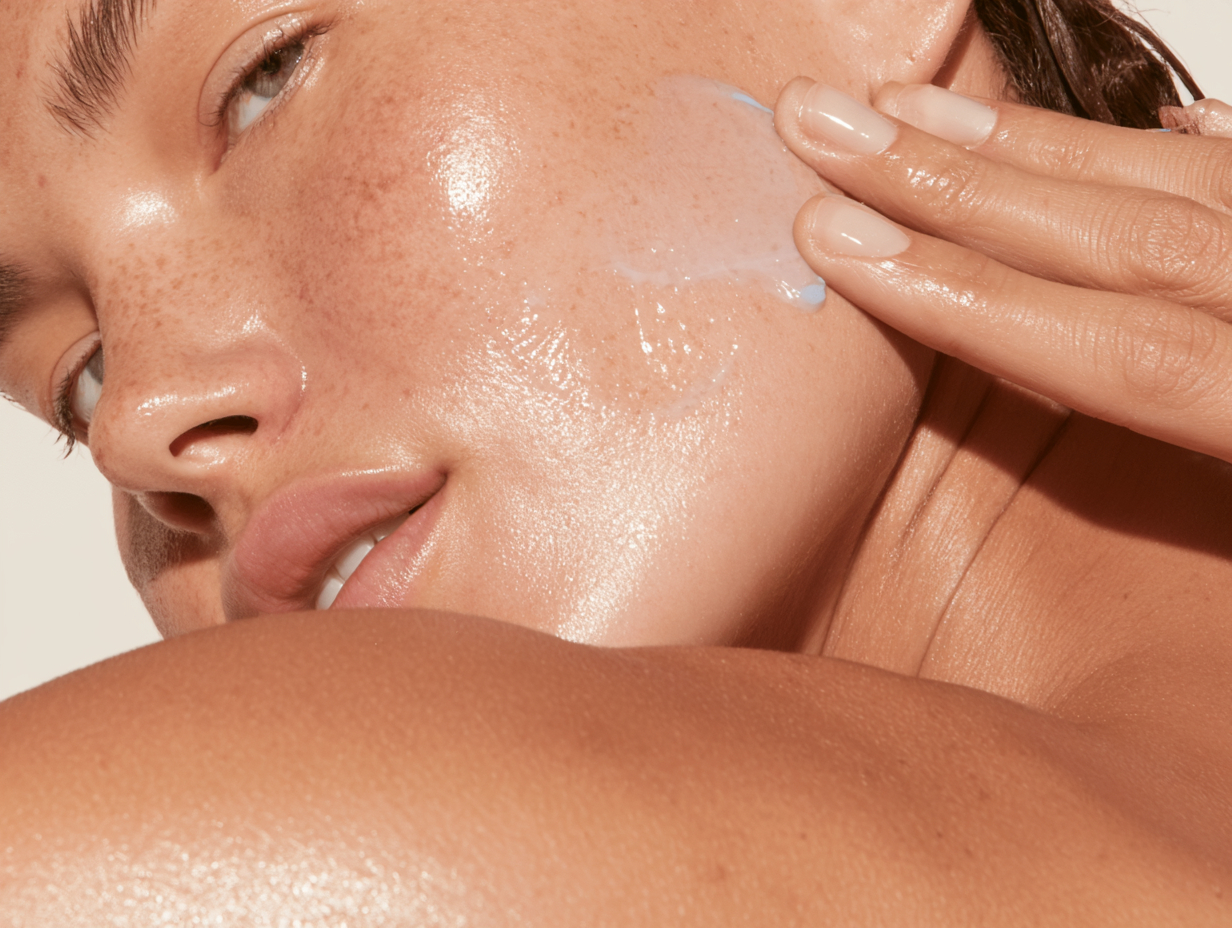
Turn over a skincare serum bottle these days and there’s a good chance you’ll see GHK-Cu, copper tripeptide-1, or some formulation of it buried in the middle of an ingredient list next to the retinol and the niacinamide.
So what is this peptide, and what does it do?
GHK-Cu is a copper peptide that stimulates collagen, elastin, and skin repair. Unlike most trending skincare ingredients, it’s topical form is backed by human clinical trials that date back to the late 1990s, not just cell studies and marketing copy.
Most people scroll right past this ingredient on the label, but they shouldn’t.
Topical GHK-Cu is way more than a moment of TikTok virality. It’s been in continuous scientific study since 1973, which makes it one of the most researched peptides in skincare.
While most trending ingredients get a handful of papers and a marketing push, topical GHK-Cu has five decades and a solid body of clinical evidence behind it.
So let’s see what that evidence says.
GHK-Cu is a naturally occurring tripeptide that shows up in human:
Officially, it’s glycyl-L-histidyl-L-lysine, bound to a copper ion.
Researcher Loren Pickart first isolated it from human plasma in 1973 and what he found was strange enough to launch an entire career’s worth of follow-up research. Pickart discovered that plasma from younger donors, applied to older liver cells in a lab, made those older cells act more like young ones.
The active component responsible turned out to be GHK-Cu.
Your body produces GHK-Cu as part of its natural wound-response system. When tissue gets injured, plasma GHK-Cu concentrations spike almost immediately, setting off a whole repair operation:
It’s basically the body’s own signal that something needs to be fixed.
But there’s a catch. GHK-Cu production declines as we age. Less GHK-Cu circulating means a slower repair response. And this tracks with a lot of what shows up on skin as we age: thinner dermis, slower healing, and less collagen turnover.
Topical GHK-Cu is essentially borrowing the body’s own repair signal and reapplying it directly where you want it.
Copper does a lot of the heavy lifting. Think of it like the spark plug your skin needs to build strong collagen. Without enough available copper, your body can still make collagen, but it comes out weaker.
GHK-Cu also flips one of the body’s main repair switches, the same signaling pathway that’s involved in tissue remodeling everywhere else in the body. Here’s where it gets wild: Research has found that topical GHK-Cu can actually nudge how about one-third of your genes are behaving. In lab research, these include genes linked to skin repair and collagen production.
That’s a lot of influence for a molecule made of just three amino acids!
In lab studies, topical GHK-Cu gets skin cells producing:
All these things keep skin firm, bouncy, and hydrated.
And those three things just so happen to be what aging skin struggles with.
This is where topical GHK-Cu really shines brighter than most trending skincare ingredients. It has a stack of controlled human trials behind it that go back decades.
Does it really reduce wrinkles?
Yes, and the numbers are bigger than you’d expect from a skincare ingredient. In a comparison study against a leading synthetic peptide, GHK-Cu cut wrinkle volume by 55.8% and wrinkle depth by 32.8% compared to an untreated control. It beat the competitor product by a serious margin on the same measurements.
A separate 12-week trial in 71 women found significant improvements in fine-line depth and skin firmness, confirmed with both cutometry (a device that measures skin elasticity) and ultrasound imaging. (Presented at the American Academy of Dermatology meeting, February 2002.)
Is it building new collagen, or just plumping the surface?
This is the question that separates a real skincare ingredient from a marketing story. And it’s where topical GHK-Cu has some of its most convincing data.
A randomized controlled trial in photoaged skin found measurable improvement in fine wrinkles, pigmentation, and skin roughness.
And a three-month ultrasound imaging study tracking 21 people found an average 28% increase in collagen density. The top quarter of participants saw improvements above 50%.
Now that’s a structural change happening underneath the skin, not a surface-level effect that fades the moment you stop applying the product.
How does it compare to retinol, the current gold standard?
There’s only been one study that’s ever compared them directly. And in that study, a topical copper peptide cream outperformed prescription tretinoin on collagen production. 70% of topical copper-peptide users showed increased procollagen synthesis, compared to 40% on tretinoin. And they did it without the irritation, peeling, and sun sensitivity that come standard with retinoids.
Now, it’s important to talk about the evidence base. Many of the strongest human trials are 15-25 years old, and a handful of the numbers you’ll see quoted online originate from industry-funded or smaller-sample studies rather than large academic trials. That’s a limitation, and it’s worth knowing.
What sets topical GHK-Cu apart is that the research trail is long, consistent, and still active.
A Phase 2 randomized, double-blind trial evaluating topical GHK-Cu for wound healing is currently enrolling as of mid-2026, which means the evidence base keeps growing rather than sitting frozen in the 1990s and 2000s.
We also want to note that all the trials we mention here tested topical GHK-Cu— not injectable, which has a thinner evidence base.
Topical GHK-Cu versus injectable is an important conversation.
This refers to the serums, creams, and gels sold in standard retail concentrations. These are regulated as a cosmetic ingredient, not a drug. Which means it doesn’t go through the FDA drug approval process, and doesn’t require a prescription to sell or buy. Efficacy may vary.
This is a different tier of topical GHK-Cu. These stronger formulations require a prescription from a licensed provider and are prepared through a compounding pharmacy, the same way many other clinical-strength topicals are. This tends to be the product of choice for businesses looking to offer clinical-grade topical GHK-Cu
It was on the FDA’s Category 2 list from 2023-2026, but in April 2026, it became one of the twelve peptides that the FDA removed from that list. That means that the compounding pathway is under review, with a formal decision from the FDA’s advisory committee expected by early 2027.
Injectable GHK-Cu is not FDA-approved and is not currently eligible for compounding. Topical products are a straightforward retail or spa-service addition, available right now.
If you’re an esthetician, medspa, or wellness practice building out a skincare line or treatment menu, GHK-Cu is one of the rare ingredients where you can back up the claim with citations.
That definitely means something to clients who’ve gotten (rightfully) skeptical of “clinically proven” claims that can’t be traced back to a source.
Clients using retinoids who can’t tolerate the irritation often do well with copper peptides instead. That’s because topical GHK-Cu’s irritation profile is much more gentle at standard concentrations.
And because the collagen-building mechanism is different from retinoids, some practices layer the two rather than choosing one over the other.
Is topical GHK-Cu baked by real clinical research?
Yes, and more than most skincare ingredients on the market.
Topical GHK-Cu has been studied continuously since 1973, with multiple double-blind, placebo-controlled human trials measuring wrinkle depth, collagen density, and skin firmness.
A new Phase 2 trial is currently happening. That said, many of the landmark studies are smaller or industry-funded, so the evidence is strong but not without limitations.
How long does it take to see results?
Most controlled studies show measurable change starting around 8 to 12 weeks of consistent daily use.
Some people notice a softer, smoother skin texture earlier than that, but the structural changes (increased collagen density, improved elasticity) take the full 8-12 week window to show up reliably.
What’s the difference between GHK-Cu and retinol?
They’re completely different mechanisms. Retinol works primarily by accelerating skin cell turnover and can cause significant irritation, especially in early use.
Topical GHK-Cu works by activating the body’s own collagen-signaling and repair pathways, and is more gentle and tolerable.
Some practices use topical GHK-Cu and retinol together rather than as substitutes for one another.
Skincare trends come and go fast enough that skepticism is the default. Topical GHK-Cu is an exception to that skepticism because the research is longer and more consistent than almost anything else in the category.
For practices building a skincare program grounded in real evidence rather than ingredient-of-the-month hype, topical GHK-Cu is one of the stronger cases available.
Topical GHK-Cu is widely available as a cosmetic skincare ingredient. Injectable GHK-Cu is not FDA-approved and is not currently eligible for compounding.
Want to offer medically supervised programs under your own brand? Altro connects wellness businesses with independent licensed providers, licensed U.S. pharmacies and lab testing on one platform. Schedule a call to see how it works.
Effects of GHK-Cu on MMP and TIMP Expression, Collagen and Elastin
Production, and Facial Wrinkle Parameters | Journal of Aging Science
Topical GHK-Cu Gel for Acute Skin Wound Healing (CuHeal) | ClinicalTrials.gov
Products and substances discussed in this article may not be FDA-approved and may not be available through Altro, depending on current regulations. This article is for educational purposes for wellness professionals and is not medical advice. Treatment decisions are made by independent licensed providers after an individual evaluation.