Testosterone Therapy for Men: What’s Hype and What’s Evidence?
TRT is everywhere. Here’s what the data says about who benefits, what the risks are, and why it’s rarely just about testosterone alone.
Peptides are everywhere in wellness — from GLP-1s to BPC-157. Here’s what they are, why they’re trending, and what the clinical evidence shows.
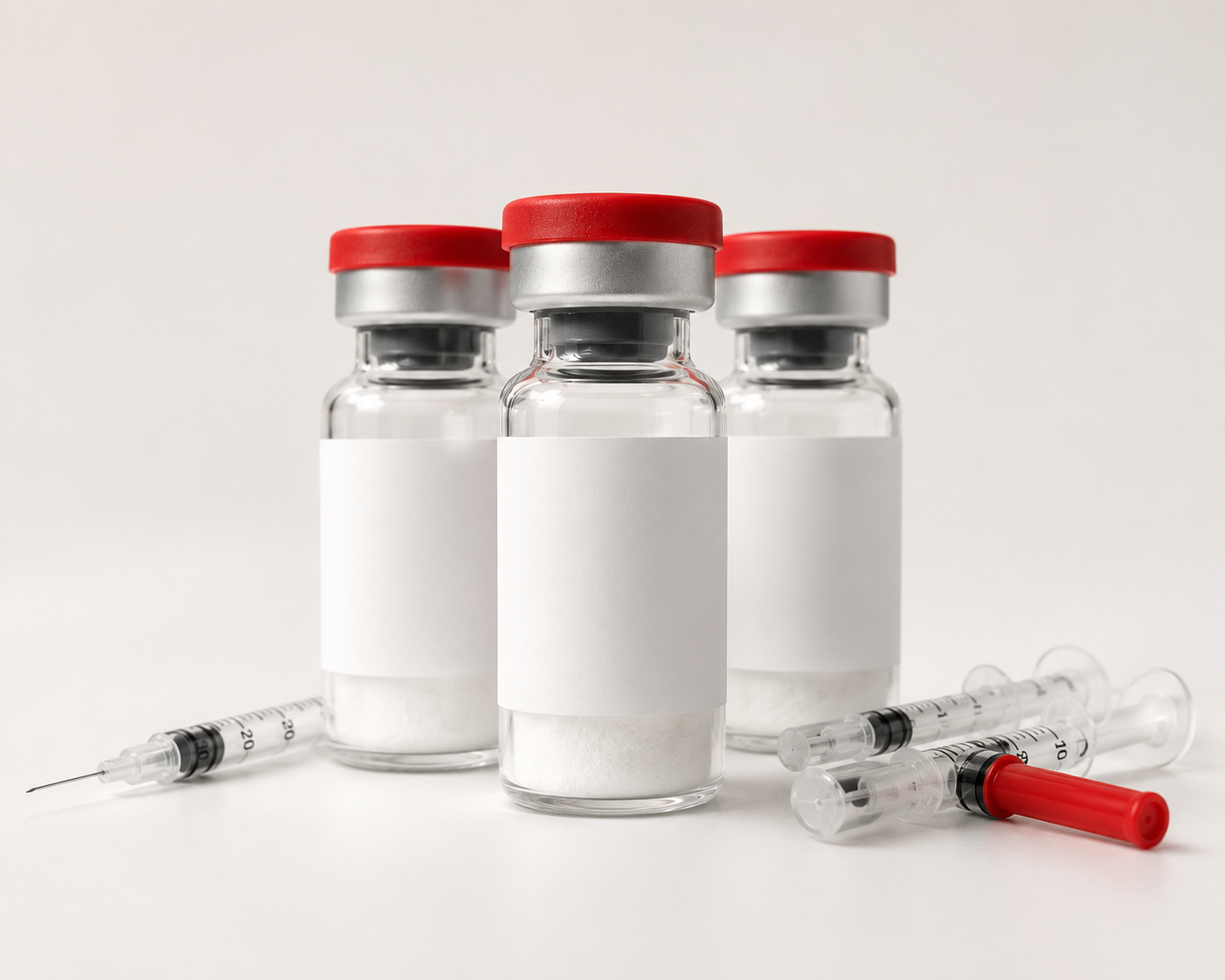
Scroll Instagram or TikTok for 30 seconds and you’ll see them. Before-and-after photos. Vial logs. Reels of subcutaneous injections in beautiful bathrooms. “How I lost 40 pounds on Mounjaro” threads.
Peptides have moved from biohacker forums to mainstream wellness, and they did it in under 2 years.
The shift is real. But you know what else is? The confusion.
GLP-1s, BPC-157, sermorelin, NAD+ — they all get grouped into the same conversation, but they work differently, have different research supporting them, and exist in completely different regulatory zones.
We’re here to clear up some of that confusion. Read on for what peptides are, why everyone’s talking about them, and how to separate the science from trending internet noise.
Simply put, a peptide is a short chain of amino acids. Peptides are small enough to act fast and large enough to truly help the body. While proteins are long structural building blocks, peptides usually run between 2 and 50 amino acids, so they’re much shorter.
The job of peptides is to function as signals. They send all kind of signals like:
Talk of peptides in the wellness world is fairly new to many people. But did you know that peptides themselves are not? In fact, they’ve been around for as long as humans have. That’s because our bodies run on peptides.
Insulin is one. So is oxytocin. So is glucagon, the hormone that raises blood sugar. And so is glucagon-like peptide-1 (GLP-1), the molecule that we all know as Ozempic, Wegovy, Mounjaro, and Zepbound.
When someone says “peptide therapy,” they usually mean a bioidentical version of one of those natural signaling molecules, or an engineered variant created to:
The peptides everyone’s talking about today are refined versions of molecules your body has used for millions of years.
Here’s how they got to be such a hot topic.
The landmark STEP 1 trial is the study that led to Wegovy’s approval for chronic weight management and obesity. It showed an average weight loss of 14.9% over 68 weeks on semaglutide.
This was a major improvement from every prior obesity drug.
And follow-up of the study participants at two years confirmed the drug’s effects held, with sustained 15.2% weight loss.
Then came tirzepatide, which pushed the numbers even further. This saw up to 22.5% weight loss at the maximum dose, with 96% of participants reaching at least 5% weight reduction.
But that’s not it. Studies started to emerge about the other benefits of GLPs.
A major cardiovascular outcomes trial showed semaglutide cut the risk of major cardiovascular events by 20% in adults with overweight or obesity and existing cardiovascular disease.
All those numbers reshaped the obesity conversation overnight. They also made the broader category of peptide therapeutics impossible to ignore.
For practitioners, this is the moment when peptide therapy stopped being fringe and started being something a credible wellness business needed to offer.
For years, popular non-FDA approved peptides like BPC-157 and TB-500 sat on the FDA’s category 2 restricted list, which blocked compounding pharmacies from preparing them.
On April 15, 2026, the FDA announced it was removing 12 of those peptides from that list (effective April 23).
But it’s important to note that removal is not the same as approval to compound. The FDA’s advisory committee is meeting July 23-24, 2026 to weigh in on this.
Regulations are shifting in real time, and the July decision will determine how compounded peptides become available next.
The longevity and preventative health world has been circling the same question for years: how do you intervene before symptoms become disease?
Peptides became one of the most promising answers. That’s because they work at the signaling level by prompting:
For practitioners already thinking in terms of prevention, peptides definitely expand the toolkit in very useful ways.
Here are the peptides that are the current hot topics.
Semaglutide and tirzepatide — better known as Ozempic, Wegovy, Mounjaro, and Zepbound — are the most studied peptides on the market. They’re FDA-approved, with hundreds of thousands of patients across published trials, plus the strongest evidence base of any compounds in this article.
Beyond weight loss and blood sugar control, researchers are now looking at whether they:
While these potential benefits have incredible potential, there are also some questions about what these drugs cost the body alongside the benefits.
One such big question is how much muscle people lose while they’re on them. And another is what happens when you stop taking them.
Follow-up data from the original semaglutide trial showed participants regained about two-thirds of weight they’d lost within a year of stopping treatment. This makes it clear that these compounds certainly work, but they work best as part of a longer timeline of care, not as a short-term fix.
Sermorelin, ipamorelin, CJC-1295, and tesamorelin are for when you want the benefits of growth hormone without taking growth hormone itself.
Instead of replacing the hormone directly, these peptides signal the pituitary gland to make more of your own, preserving the natural rhythms the body uses to release it.
Sermorelin had FDA approval from 1997 to 2008 under the brand name Geref. But the manufacturer eventually pulled it purely for commercial reasons. Sales didn’t justify the cost of keeping the product on the market.
Tesamorelin (Egrifta) currently has FDA approval, but only for the use of reducing belly fat in people with HIV.
The rest get prescribed through 503A compounding pharmacies.
People take these peptides hoping to drop body fat, sleep deeper, recover faster, and feel more energy, but large randomized human studies in healthy adults are still scarce.
That said, practitioners working with these peptides report some of the most consistent client satisfaction in the category — especially for clients dealing with the energy and recovery dips that come with age.
BPC-157 and TB-500 (thymosin beta-4) lead this group.
They’re the peptides people reach for after stubborn injuries:
Animal studies show both speed up tissue repair by triggering new blood vessel growth and signaling cells to migrate toward damaged tissue.
Human trials are still rare, though, and BPC-157 and TB-500 are two of the seven peptides on the FDA committee agenda in late July. This means their legal status for compounding could shift very soon.
Thymosin alpha-1 (Zadaxin) is the most well-known compound in this category. People take it hoping to give their immune system extra backup, and it’s already approved in over 30 countries to help patients fight off hepatitis B or get through chemotherapy.
The others — GHK-Cu, MOTS-c, epitalon, and SS-31 — are a bit more experimental. They show up in longevity protocols aimed at supporting:
Most of the evidence still comes from animal studies and lab-based mechanism research, with large human trials lagging behind. So anyone using these compounds is in early-adopter territory, working with tools the science is still catching up to.
PT-141 (also called bremelanotide, sold as Vyleesi) is the main compound for this category of peptides.
It works by activating arousal pathways in the brain, which means it can help with desire at the neurological level. This is useful when there are no physical problems, but the interest is missing.
It’s FDA-approved for low sexual desire in premenopausal women and prescribed off-label across other populations.
The right way to use peptides follows a clear pattern. Four key pieces show up across every protocol that delivers the results people are after:
Safe and effective peptide care starts with a physician evaluation and a round of baseline labs to see what’s going on in your body before you start adding anything to it.
Then, the peptide is prepared by a licensed 503A or 503B compounding pharmacy that meets the same sterility and potency standards as your local pharmacy.
And there’s monitoring built in along the way — blood panels run at intervals, with the doses adjusted based on how your body is responding.
Finally, the whole protocol is tied to a clear outcome you’re tracking. This could be either:
or
When this four-step protocol is in place, clients get real diagnostics, real expertise, real follow-through, and real accountability.
The DIY version, on the other hand, looks very different. People usually order vials online from companies that label their products “for research purposes only.” Then they follow dosing instructions from a TikTok video or Telegram group, and inject without any medical oversight or follow-up labs.
The FDA has documented contamination, mislabeling, dosing inconsistency, and serious safety concerns with unregulated peptide sources. Some of the vials ordered online contain less peptide than the label claims. Some contain more. Some contain something else entirely. Some contain nothing at all.
This is exactly why peptides are moving toward physician-supervised care so quickly. Practitioners offering the higher standard are setting the bar for what peptide therapy is supposed to look like.
What’s the difference between peptides and steroids?
They’re chemically different and they work differently in the body.
Steroids are fat-based molecules built from cholesterol, while peptides are short chains of amino acids. Anabolic steroids work by mimicking testosterone. Meaning you take it and it acts directly on muscle tissue.
Most peptides work one step earlier, telling your own body to produce more of a hormone or activate a specific receptor.
The risk profiles and legal status are also very different. And not all peptides can be offered.
Are peptides safe?
The honest answer is: it depends.
The specific peptide, the dose, where it came from, and whether a clinician is monitoring you — all of those matter more than the “are peptides safe” question on its own
FDA-approved peptides like semaglutide, tirzepatide, and PT-141 have tried-and-true safety profiles from large clinical trials.
Compounded peptides used under physician supervision through licensed pharmacies can be safe with proper monitoring.
The risks and harms that you sometimes see in medical literature mostly come from unregulated online sources or people who are DIYing their peptide care.
Do peptides require a prescription?
Any peptide you take — whether it’s an FDA-approved drug like Wegovy or a compounded peptide like BPC-157 from a licensed pharmacy — should require a prescription from a licensed clinician.
Peptides sold online as “for research only” don’t technically require a prescription, but that’s also where the safety concerns start because there’s:
How long until peptides show results?
It depends on which peptide and what you’re tracking. PT-141 (for sexual desire) can kick in within an hour of injection. GLP-1 weight loss really starts to show up in the first 3 to 4 months. Growth hormone-axis peptides like sermorelin usually need 8-12 weeks before you see any measurable change in body composition. Longevity-focused peptides are evaluated over months or years. They’re a long game where the data shows up slowly.
Peptides are the buzz of wellness conversations.
Clients are asking about them more often. The regulatory picture is shifting. And more practices are starting to look seriously at whether peptides belong in their offering.
What’s changed is more than just interest. It’s also the level of complexity around doing peptides correctly.
Most coaches, medspas, and wellness centers don’t have the clinical infrastructure to offer peptides safely on their own.
Doing it right means physicians on staff, partnerships with licensed compounding pharmacies, lab logistics, patient monitoring, multi-state regulatory compliance, and a way to manage the whole operation without losing your relationship with the client.
That’s the gap Altro Health was built to fill.
We help coaches, medspas, and wellness centers offer approved peptides under their own brand with:
You stay the trusted voice while the clinical work happens behind the scenes. Your practice grows, your clients stay longer, they refer their friends, and they get the kind of care most of them couldn’t find anywhere else.
The peptide movement isn’t waiting — it’s happening right now. The wellness businesses that build clinical-grade peptide care into their offerings now are the ones their clients will stay with for the next decade.
Biochemistry, Peptide | StatPearls
Once-Weekly Semaglutide in Adults with Overweight or Obesity | The New England Journal of Medicine
Tirzepatide Once Weekly for the Treatment of Obesity | The New England Journal of Medicine
July 23-24, 2026: Meeting of the Pharmacy Compounding Advisory Committee | FDA
Drugs@FDA: FDA-Approved Drugs | FDA
VYLEESI (bremelanotide injection), for subcutaneous use | FDA