Testosterone Therapy for Men: What’s Hype and What’s Evidence?
TRT is everywhere. Here’s what the data says about who benefits, what the risks are, and why it’s rarely just about testosterone alone.
Sourcing GLP-1s in 2026 looks very different than it did two years ago. Here’s how to navigate the new legal landscape, and what to ask a potential pharmacy partner.
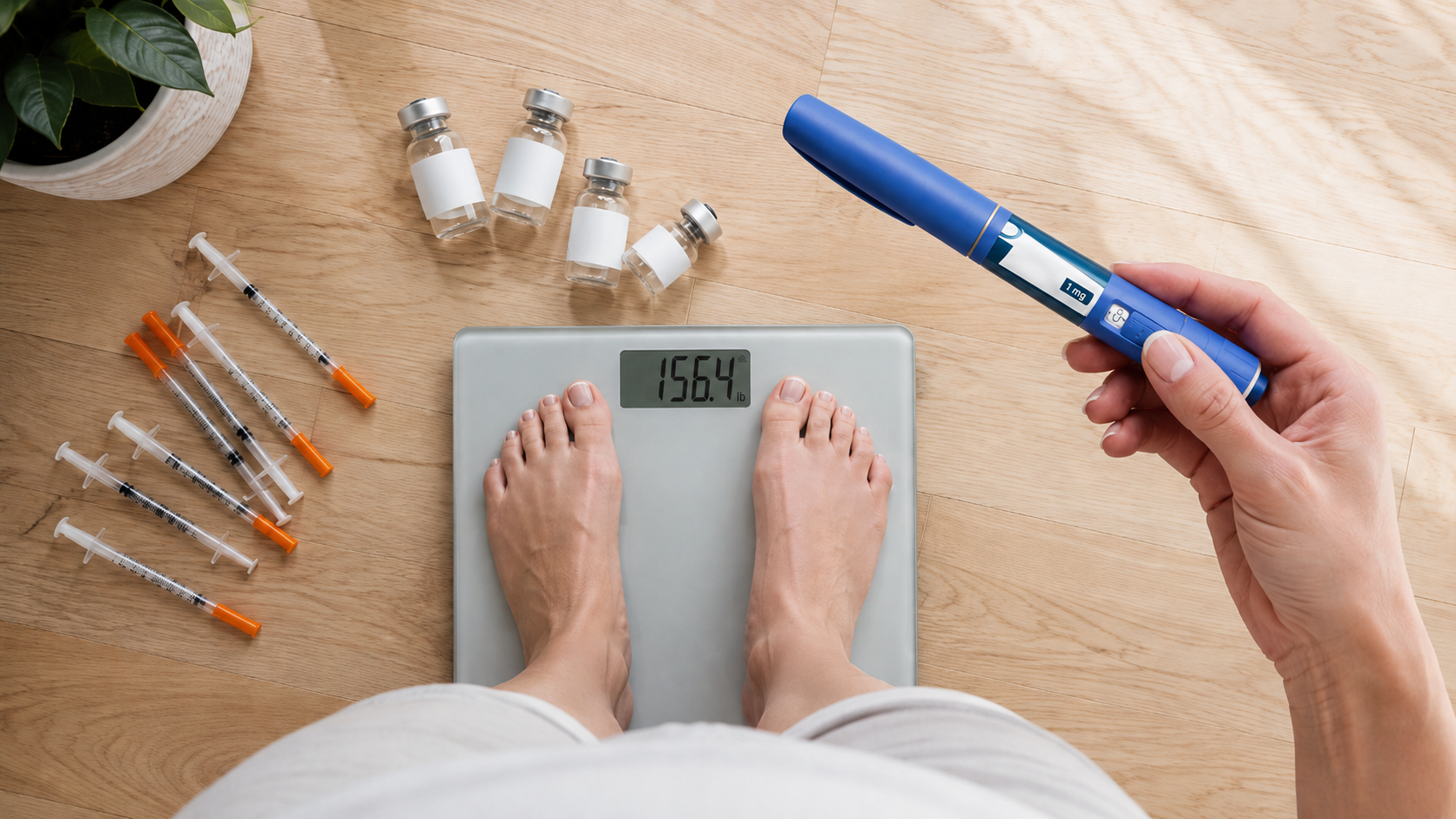
Two years ago, sourcing GLPs for your practice looked a lot simpler. You partnered with a specialty pharmacy that could make custom versions of semaglutide at a fraction of the brand-name price. And you offered it to clients.
The FDA had given temporary permission for this kind of custom-made supply because there wasn’t enough of the brand-name version to go around.
But then the rules changed.
In late 2024 and early 2025, the manufacturers caught up. Which means there was enough brand-name supply to meet demand. So, the FDA pulled back the special permission that it had allowed pharmacies to make custom copies. By April 2026, the agency had proposed closing those custom-supply pathways permanently, and the public comment period on that closure ends July 30, 2026.
So what does this mean for you?
If you’re like most wellness businesses, you’re probably sorting through a new set of questions: what’s still legal, what’s high-risk, what still makes business sense, and where to get GLPs going forward.
We’re here to help.
The compounded GLP boom came from one key rule in federal law: when an FDA-approved drug is in short supply (meaning the manufacturer can’t make enough to meet demand), the FDA puts it on what’s called the “shortage list.”
Once a drug is on that list, specialty pharmacies are allowed to make custom versions of it so patients can still get the medication. This rule was created to keep people from going without their prescriptions.
Now, semaglutide and tirzepatide (the molecules in Mounjaro and Zepbound) got added to that shortage list in 2022 because the incredibly high demand was outpacing what the original drugmakers could produce. And that opened the door for specialty pharmacies to start making custom versions at much lower prices.
What followed was a major market shift. Telehealth platforms scaled quickly. Medspas and wellness centers built weight-management programs around $199/month compounded semaglutide, compared to $1,000+ for branded products. For many practices, the lower monthly price made the offering viable in a way branded medications were not. At one point, compounded versions made up about 30% of all GLPs in the country.
And then, supply caught up.
The FDA resolved the tirzepatide shortage in October 2024 and the semaglutide shortage in February 2025. After the grace periods ended, the legal pathway for custom-made copies narrowed significantly.
By April 30, 2026, the FDA proposed permanently closing the larger-scale outsourcing pathway for these drugs, too. The topic has been opened up to public comment, and that period closes July 30. 2026 with the final determination to follow.
So now that you have that background information, here are your current options for sourcing GLPs.
As of today, there are four sourcing pathways. But, they are not equal in risk, compliance, or practicality.
The most straightforward path (and the only one with the least regulatory ambiguity) is prescribing FDA-approved branded products like Wegovy, Ozempic, Mounjaro, Zepbound, Saxenda, or Victoza.
The process is simple:
Step 1: A licensed clinician evaluates the patient.
Step 2: The patient gets a prescription.
Step 3: The prescription is filled at a retail or specialty pharmacy.
Insurance may or may not cover it, and out-of-pocket cost runs about $1,000 - $1,4000 per month without coverage. (You might get it for less with manufacturer savings programs.)
The pros? Legal, well-studied, direct line of accountability back to the drugmaker.
The cons? The high price is the catch, and supply only holds up if the drugmakers keep pace with demand.
This pathway is still legal, but the conditions are much more strict than they used to be. Specialty state-licensed compounding pharmacies (called 503A pharmacies) prepare medications one prescription at a time, based on what an individual patient needs.
They can still make custom versions of semaglutide or tirzepatide today, but only when there’s a documented medical reason the patient can’t take the brand-name version. It could be that they’re allergic to an ingredient in the FDA-approved product. Or maybe they need a dose strength the manufacturer doesn’t make. Situations like that may qualify.
What these pharmacies can’t do anymore is make routine custom copies at scale just because they’re cheaper than the brand-name version. The FDA has been actively cracking down on that, with warning letters issued to pharmacies and telehealth companies during 2025.
The key here is documentation. Every patient needs a written medical reason for needing the custom version. Without a clear medical rationale, this pathway becomes harder to justify.
A second type of specialty pharmacy (called a 503B outsourcing facility) operates at a bigger scale.
These pharmacies:
As of mid-2026, this route is still in flux. The FDA’s April 30, 2026 proposal would close it permanently for GLPs if finalized, but the rule isn’t final yet.
Several lawsuits from the compounding industry have created additional uncertainty about when the door shuts on this option.
For practitioners, that means these pharmacies are still supplying GLPs today, but probably not for much longer. Late 2026 or early 2027 is the likely cutoff.
This is the sourcing category that keeps regulators, physicians, and legitimate wellness practices up at night.
Research-grade peptides are off-label, not intended for human use, and are typically sourced from unverified online vendors under “for research only” labels.
Nothing about the product is regulated. Not the ingredients, not the dose, not the sterility, not who’s making it.
The vendor list is a rotation of overseas websites, private Telegram channels, WhatsApp groups, “biohacker” collectives, and social media accounts that disappear and reappear under new names every few months.
The people running these operations are not pharmacists. They’re not compounders. ANd they’re trying to sell to individual consumers with dosing instructions that are honestly in a legal grey area.
Here's what the FDA has documented about products sourced like this:
Sourcing this way is a liability waiting to happen for the client injecting the product and for the wellness business that recommended or sold it.
This is why compounded medications from a licensed 503A or 503B pharmacy are the way to go. Compounded pharmacies are state-licensed and their ingredients come from FDA-registered manufacturers. Their products are tested for potency and sterility. All this means they can also be held accountable when something goes wrong.
A random seller online has zero liability.
Our approach? Steer clear of research-grade peptides.
A trustworthy compounding pharmacy has a few non-negotiables:
That’s what you want.
If a pharmacy hesitates on any of the above things, keep looking.
The good news is that most wellness businesses don’t even have to worry about pharmacy shopping. Working with a clinical infrastructure partner that’s already vetted its pharmacy relationships takes this off your plate. That’s exactly why partnerships like Altro exist.
Next comes the question: who do you want to work with?
Choosing a partner to provide these services is one of the most important decisions a wellness practice can make, especially if you are looking for a platform to access pharmacies and prescribers. Here are the questions to ask:
Is compounded semaglutide still allowed in 2026?
Yes, but with limitations. Custom-made (compounded) GLPs are still legal when there’s a documented medical reason a patient can’t take the brand-name version. Larger-scale outsourcing pharmacies that supply offices in bulk are in a regulatory transition right now, with the FDA’s April 30, 2026 proposal to close that pathway currently in its public comment period (through July 30). Routine custom copies of GLPs at scale, made simply because they’re cheaper than the brand-name version, are no longer legal.
Please note that this is not legal advice and you should consult your own attorneys on the matter.
What’s the difference between a regular compounding pharmacy and a larger outsourcing facility?
Both make custom medications, but at different scales and under different rules. A regular compounding pharmacy (503A) is state-licensed and makes custom prescriptions one patient at a time. A larger outsourcing facility (503B) is registered directly with the FDA, makes medications in bulk for offices, and operates under stricter quality requirements. Many wellness businesses partner with both, depending on what they’re sourcing and how.
Can a coach or wellness practice prescribe GLPs directly?
No. GLP medications require a prescription from a licensed clinician, typically a physician, nurse practitioner, or physician assistant, depending on the state law. A coach or wellness practice without prescribing authority has to partner with a licensed clinician to offer GLPs legally. This is exactly why clinical partnerships have become so important.
What’s the cost difference between branded and compounded GLPs?
It’s significant. Branded GLPs run about $1,000 - $1,400 per month at retail, before insurance or manufacturer savings programs. Compounded GLPs historically ranged from $150 - 400 per month and may include additional shipping and prescribing fees. That price gap is the whole reason the compounded GLPS market exploded. It’s also why the tightening rules are hitting weight-management practices so hard.
Sourcing GLPs in 2026 is a totally different experience than it was two years ago. The era of easy, low-cost compounded copies is ending, and the larger-scale outsourcing pathway is also under pressure.
For wellness businesses that built programs around $200 compounded semaglutide, the next chapter is about compliance, documentation, and clinical infrastructure.
That shift creates a challenge, but it also creates opportunity.
The practices that adapt now — by working with licensed prescribers, vetted pharmacies, proper monitoring, and a more durable clinical framework — they’re the ones positioned to grow.
The practices that don’t are the ones at risk of enforcement actions, safety incidents, costly missteps, and the reputational damage that follows.
Altro Health is the infrastructure that modern wellness businesses run on. We provide wellness practices with access to licensed pharmacies, board-certified clinicians and the technology to support this.
Through our platform, wellness businesses can expand their offerings to labs, peptides including GLP-1s, and clinical support, while the operational pieces are handled in the background.
Whatever the FDA decides next, the practices with the right infrastructure already have a solid plan in place.
Frequently Asked Questions about Drug Shortages | FDA
FDA clarifies policies for compounders as national GLP-1 supply begins to stabilize | FDA
FDA’s Concerns with Unapproved GLP-1 Drugs Used for Weight Loss | FDA